




By Marcus Nkire
Nigerian history is littered with influential figures, individuals that helped shaped the present we live in. However, not many are universally revered and worthy of an induction into the pantheon of greats.
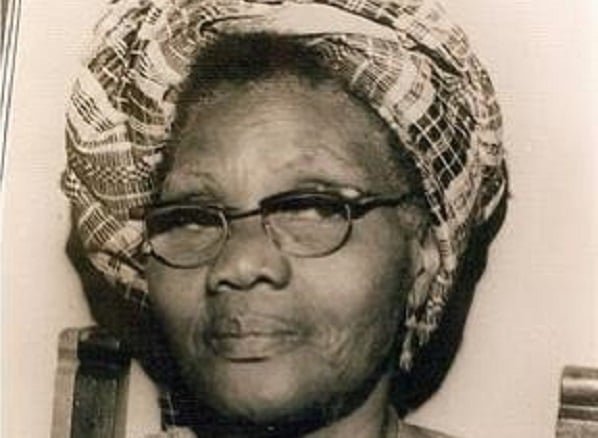
Funmilayo Ransom Kuti on her worst day, was nothing short of transformational.
Born on the 25th of October 1900 in Abeokuta, Nigeria. Her father was the son of a returned slave from Sierra Leone who found his way back home to Abeokuta.
In a time when not many girls were allowed to receive academic education, funmilayo’s parents were adamant their daughter would go to school.
Being the first girl student in Abeokuta Grammar school came with it’s own challenges, a period of adaptation interwoven in prejudice and feelings of lonesomeness. All which she navigated brilliantly, graduating to the delight of her parents, and moving abroad to England to further her education.
Upon her return, Nigeria had changed in so many ways, yet, so recognizable in ways not only she could relate to. Injustice against women was rife, a period of adaptation was once again needed for funmi to acclimatize.
She became a teacher at the same school she had attended many years before, quickly becoming a household name amongst her peers.
Her life experiences as a young girl growing up in Abeokuta fueled a new found passion and belief in the fight against what she felt was oppression on women at the time.
Widely regarded as one of the earliest propounders of the feminism movement in Nigeria. Funmi fought for women’s rights even before there was a name tag on activism.
By the time she was 25, she got married to Israel Oludotun Ransome-kuti, a clergy man who shared her passion for education. Israel was one of the founders of the Nigerian Union of Teachers and the Nigerian Union of Students.
Funmilayo founded a club for women in 1923 called the Abeokuta Ladies club. The institution was eligible for educated young girls and women who had a talent and dedication for craft, skill and industry. Social etiquettes were also taught, but advocacy for women’s rights was at the forefront of her mission.
However, at this time, the traditional chiefs in the country held great power, borderline tyrannical and in direct communication line with their colonial masters.
One of the main tools of oppression at this time was taxation; an unfair practice and one that strangled the livelihood of women within inches of doom.
The Alake of Egbaland was the chief. He demanded an obscene amount of money all in the name of taxation, he didn’t care that they had families to cater for with what little amount they made.
The tax mechanism for women was marked by violence, a mean streak conducted by tax officers, often chasing, beating and insulting the women during collection process.
Enraged by this, funmilayo, decided to readjust the eligibility status of her Abeokuta Ladies club, making it accessible to all women-whether educated or not.
She renamed the group to Abeokuta Women Union, arming the uneducated women with the knowledge of their civil rights and encouraging them to seek formal education.
Meanwhile, the Alake of Egbaland kept evolving in wickedness, this time he bugun seizing the goods of market women and selling them at a price for profit.
After sending several appeals to the Alake, all which fell on deaf ears, Funmilayo was forced to act for the sake of those who she represented.
Marches and protest overseen by Kuti were organized, yet the Alake still didn’t budge. Infact, on one occasion, Funmi led a thousand women to the ruler’s palace to make their grievances heard, the women were chastised, attacked with tear gasses, beaten up and driven out of the premises by policemen.
Then came the mother of all protests, a gathering of no less than 20,000 women, driven with intent and enough vim to out-burn a molten heat, took place, eventually forcing the ruling Alake to abdicate his position temporarily.
Dubbed the “lioness of Lisabi” for her exploits in advocacy for women but mostly for her show of strength in the face of oppressive power.
Ransome-kuti went on to stamp her legacy on multiple fronts ; her political influence grew, she took part in the Nigerian Independence movement, attending conferences and joining overseas delegation to discuss pertinent national issues.
Looking back on the legacy of Funmilayo Ransome-kuti, the feeling is one of national pride, strength, bravery and conquest in the face of adversity.
Hers is a story of layered varying success and achievements, as she also became the first ever woman to drive a car in Nigeria. SHE IS HIM!
Definitely check out the Tiger888apk! The UI is great for mobile, I can get my game on anytime. Worth a download tiger888apk
88vi treating me right! Great streaming options, especially for live sports. Definitely worth a look 88vi.
Looking up the meaning of ‘dwindle?’ Dwindlemeaning.com actually explained it pretty well. Good resource at dwindlemeaning.
Dwindled.net, simple and to the point. Found what I needed quickly. Worth a look at dwindled if you need it.
8777cx seems interesting, I’m checking it out now. Hopefully they have what I’m looking for. Take a peek at 8777cx!
I like this weblog its a master peace ! Glad I noticed this on google .
I would like to thnkx for the efforts you have put in writing this blog. I am hoping the same high-grade blog post from you in the upcoming as well. In fact your creative writing abilities has inspired me to get my own blog now. Really the blogging is spreading its wings quickly. Your write up is a good example of it.
I regard something really interesting about your web site so I saved to bookmarks.