



From Marcus Nkire
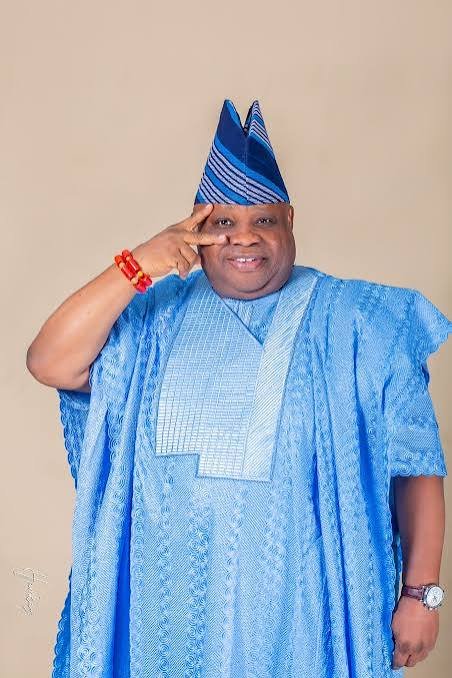
Governor Ademola Adeleke has won a second term as governor of Osun State after defeating the All Progressives Congress (APC) candidate, Bola Oyebamiji, in the August 15 governorship election.
Results announced by the Independent National Electoral Commission (INEC) showed Adeleke, who contested under the Accord Party, finishing with 511,067 votes. Oyebamiji recorded 444,815 votes, while the African Democratic Congress (ADC) candidate, Najeem Salaam, polled 17,180 votes.
Adeleke carried 19 of the state’s 30 Local Government Areas, with Oyebamiji winning the remaining 11.
The outcome gives Adeleke another four years in office and represents a second consecutive governorship defeat for the APC in the state. Adeleke had previously defeated former Governor Gboyega Oyetola in the 2022 election, after Oyetola narrowly edged him in the 2018 contest.
APC Division Worked Against the Party
One of the major factors identified in the election was the lack of cohesion within the APC.
Different factions reportedly maintained separate political structures during the build-up to the election. The Ileri-Oluwa group remained influential, while the Alubarika faction associated with APC National Secretary, Ajibola Basiru, operated separately. The party chairman and his supporters also maintained their own political base.
The divisions that surfaced during the party’s primary election were not fully resolved before the governorship poll, leaving the APC without the level of unity needed for a coordinated campaign.
Adeleke Benefited From Workers’ Support
Adeleke’s record on workers’ welfare also featured prominently in the campaign.
The governor’s administration highlighted the regular payment of salaries and its attention to the welfare of civil servants. Support from workers became an important part of Adeleke’s campaign, particularly against the background of salary payment difficulties experienced under previous administrations.
Political support from other influential figures also strengthened his position. Former Deputy Governor Iyiola Omisore was associated with support for the governor in the Ife area despite publicly backing the APC candidate.
Davido also played a visible role in Adeleke’s campaign. The music star, who served as chairman of the Imole Youth Mobilisation Campaign Council, used his popularity to mobilise young voters and support the governor’s re-election effort.
Where the Candidates Performed Strongly
Adeleke recorded some of his strongest figures in Osogbo, Ede North and Ede South, where he secured 36,480, 35,427 and 26,188 votes respectively.
He also won in Iwo and reportedly defeated Oyebamiji at Omisore’s polling unit.
Oyebamiji’s strongest performances came from areas such as Irewole, Olorunda and Ilesa East.
Although Oyebamiji recorded 444,815 votes — the highest total reportedly achieved by an APC governorship candidate in the state — the figure was insufficient to close Adeleke’s advantage across the state.
Voter Turnout and INEC Performance
The election attracted considerable participation, with more than half of the roughly 1.9 million registered voters who collected their Permanent Voter Cards taking part.
INEC also received commendation for the timely transmission and uploading of results on its electronic platform.
Civil society observers generally described the election as peaceful and orderly, although there were reports of political violence in some areas.
Yiaga Africa said the Osun exercise showed that INEC was capable of delivering a credible electoral process when sufficient resources and monitoring were available. The organisation, however, urged the commission to maintain the same standard nationwide during the 2027 general elections.
Adeleke Seeks Unity After Victory
After his victory was declared, Adeleke appealed to his opponents to accept the result and called for unity across the state.
He dedicated his victory to the people of Osun and described the outcome as a victory for democracy.
The governor also acknowledged President Bola Tinubu’s contribution towards ensuring a peaceful election.
Looking ahead to his second term, Adeleke said his administration would pursue the transformation of Osun from a largely civil-service-driven economy into an industrialised state, while continuing its focus on agriculture, infrastructure, education and other areas of development.
APC Considers Legal Options
The APC said it was reviewing the results from the various wards before determining its next course of action.
The party said it would consult its legal team and consider the remedies available under the Electoral Act, including the possibility of challenging aspects of the election through the appropriate judicial channels.
At the same time, the party called on its members and supporters to remain peaceful and avoid responding to provocation.
Implications Beyond Osun
The result has attracted attention from political figures and parties ahead of the 2027 general elections.
Former Cross River State Governor Donald Duke described the election as an important test of Nigeria’s electoral process ahead of 2027. Oyo State Governor Seyi Makinde also said the outcome demonstrated the power of voters in a democratic system.
The PDP interpreted the result as a warning to the APC ahead of the next general election, while Afenifere urged Adeleke to approach his renewed mandate as a responsibility to all residents of Osun.
The Osun contest has consequently taken on wider political significance. It has highlighted the importance of party unity, incumbency, grassroots mobilisation, voter participation and the perceived performance of elected governments — factors likely to remain central to Nigeria’s political contests as the country moves towards 2027.
For Adeleke, however, the challenge has now shifted from winning the election to delivering on the expectations that accompanied his renewed mandate.
Rất cảm ơn những chia sẻ này. Nếu cần tư vấn du học Hàn Quốc, hãy tìm đến Letco — kinh nghiệm nhiều năm, dịch vụ uy tín. Chi tiết tại letco.vn.
[810549]supplies professional anti-violence equipments and solutions for the whole world with strong and perfect production capacity. anti-violence.org
Can I just say what a reduction to find someone who actually is aware of what theyre speaking about on the internet. You definitely know the best way to bring a problem to gentle and make it important. More individuals have to learn this and perceive this facet of the story. I cant consider youre not more standard because you definitely have the gift.
I had a huge win last night and the withdrawal was processed almost instantly. That is exactly what I look for in a platform. br888win19 is the real deal.
[5177]7777bd Official Login | বাংলাদেশে সেরা অনলাইন ক্যাসিনো ও অ্যাপ,7777bd-এ যোগ দিয়ে সেরা স্লট গেমের নিয়ম জানুন। বিকাশ দিয়ে টাকা জমা করে সহজেই গেম শুরু করুন। আজই অ্যাপ ডাউনলোড করে খেলা শুরু করুন। visit: 7777bd
Really impressed with the bonuses here. It is hard to find a place that actually delivers on its promises these days, but brwim4444 does it right. Definitely giving it five stars.
I have not checked in here for a while as I thought it was getting boring, but the last several posts are good quality so I guess I will add you back to my everyday bloglist. You deserve it my friend 🙂