




From Dennis Samuel
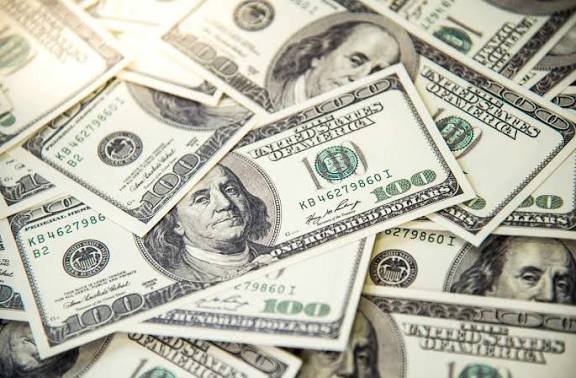
The US dollar weakened in Asian trading on Monday amid growing speculation that Washington could coordinate with Tokyo to stabilise the Japanese yen following its recent slide.
The yen surged more than one percent to 153.89 per dollar — its strongest level since November — after reports that the Federal Reserve Bank of New York had contacted market participants to discuss the currency’s exchange rate, according to Bloomberg.
Japan’s currency has been under sustained pressure due to concerns over the country’s fiscal health, the Bank of Japan’s decision to pause further interest rate hikes, and expectations that the US Federal Reserve will keep borrowing costs unchanged at its policy meeting this week. Japanese authorities last intervened in 2024 when the yen weakened to 160 against the dollar.
Speculation over possible official intervention sent the dollar lower across major currencies. The euro, British pound and South Korean won advanced, while the Singapore dollar climbed to an 11-year high.
The retreat in the greenback fuelled a sharp rally in precious metals, with gold jumping more than two percent to breach the $5,000 mark for the first time. Spot gold later peaked at $5,111.07 per ounce, while silver extended its rally above $109 after breaking the $100 level last week.
Japanese officials reinforced intervention signals on Monday.
Currency chief Atsushi Mimura said Tokyo would “continue responding appropriately against foreign exchange moves,” adding that Japan was working closely with US authorities in line with a joint statement issued by both countries’ finance ministers last September.
His comments followed remarks by Prime Minister Sanae Takaichi, who warned on Sunday that the government would take “all necessary measures” to counter speculative and abnormal currency movements.
Stephen Innes of SPI Asset Management said early Asian trading saw the dollar pressured by intervention-related chatter and thin liquidity, allowing the yen’s rebound to weigh broadly on the greenback.
MUFG analyst Lloyd Chan said markets were bracing for heightened volatility in dollar-yen trading as investors balance intervention risks with evolving expectations around Bank of Japan policy and Japan’s fiscal stance.
The rush into safe-haven assets has been driven by mounting geopolitical tensions, including former US President Donald Trump’s intervention in Venezuela and renewed warnings directed at Iran.
Strong central bank buying, persistent inflation pressures and fears of another US government shutdown have also boosted demand for gold.
“Gold’s price action over the past few days has been textbook safe-haven behaviour,” said Fawad Razaqzada, a market analyst at Forex.com, noting waning confidence in the dollar and bond markets.
Attention now turns to the US Federal Reserve’s policy meeting later this week. While policymakers are widely expected to hold interest rates steady, analysts say Chair Jerome Powell’s press conference could be overshadowed by political questions.
Bank of America economists said the Fed remains data-dependent, adding that market pricing leaves room for a potential dovish surprise.
Meanwhile, equity markets were mixed. Tokyo stocks fell 1.8 percent, weighed down by the stronger yen’s impact on exporters. Markets in Shanghai, Singapore, Seoul, Manila and Bangkok also declined, while Hong Kong, Taipei and Wellington posted gains. European markets opened mixed, with London advancing, Paris slipping and Frankfurt flat.
Oil prices extended gains from Friday after Trump said a US naval “armada” was heading towards the Gulf and warned that Washington was closely monitoring Iran.
The former president has repeatedly hinted at the possibility of renewed military action following recent hostilities involving Israel and Iran.

naturally like your website however you need to test the spelling on quite a few of your posts. A number of them are rife with spelling problems and I find it very bothersome to tell the reality however I will definitely come back again.
[7472]Okada Online Login Official | Legit Slots at Mabilis na GCash,Sa okada online, mag-enjoy sa legit online slots at matutong maglaro ng baccarat. I-download na ang app para sa pinakamabilis na GCash cashout. Sali na ngayon! visit: okada online
I like this website because so much utile stuff on here :D.